
Review the plan
Dr. Krishna reviews findings, confirms the tooth, and explains the instructions for the day of treatment.
Dental services
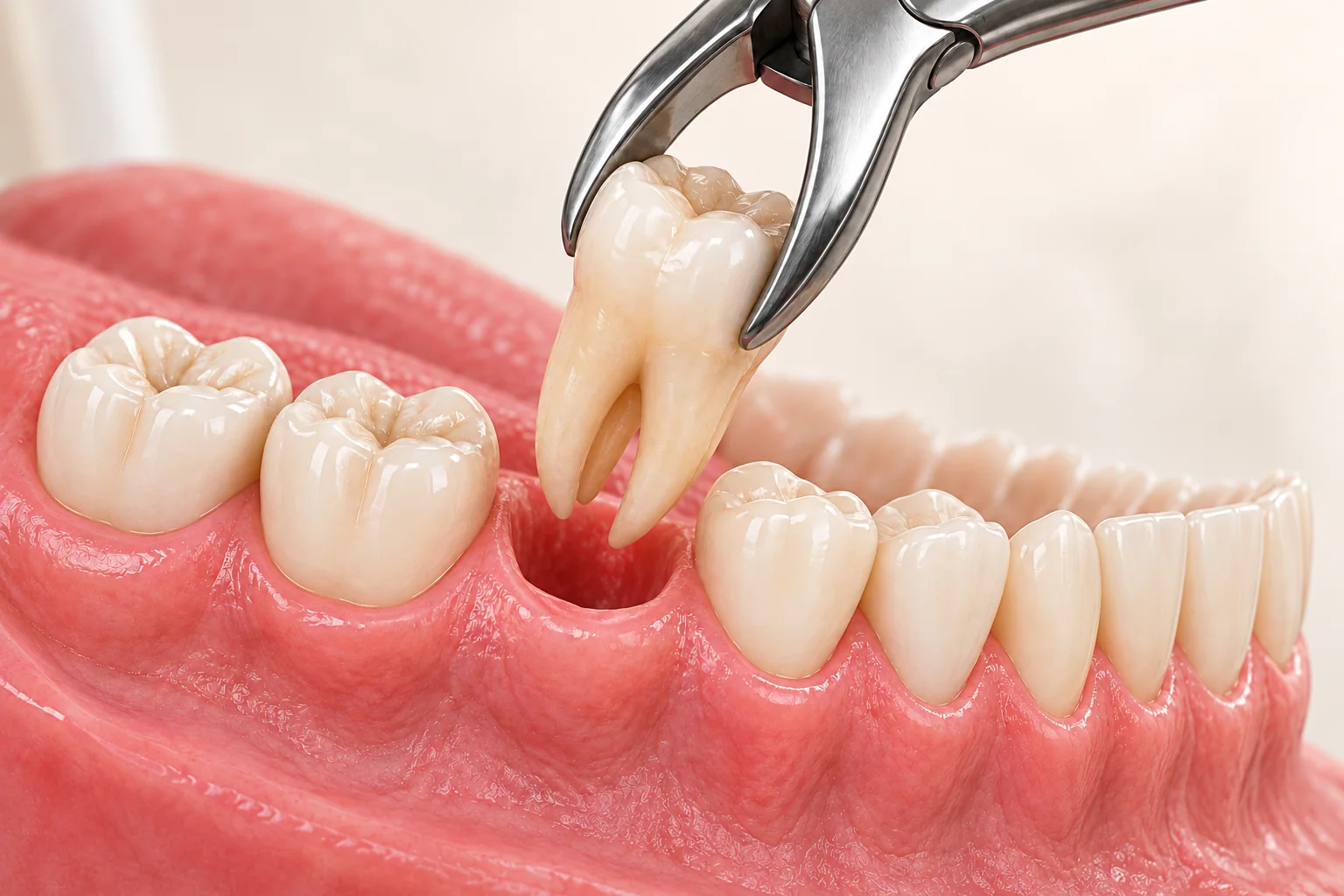
Removing a tooth is sometimes the safest or most predictable choice when it cannot be repaired or is causing ongoing problems. The decision should follow an exam and a discussion of alternatives.
Understand your options
Dentists generally look for ways to preserve a natural tooth when it can be restored predictably. Extraction may be discussed when severe damage, decay, infection, loss of support, or another condition makes keeping it unfavorable.
An exam considers whether the tooth can be repaired, the risks of keeping it, and whether the space should be replaced after removal.
Reasons to talk with a dentist
Tell the team about medications, supplements, allergies, health conditions, and prior reactions to treatment. Never stop a prescribed medicine unless the prescribing clinician gives instructions.
Ask what type of extraction is expected, how sensation will be managed, how long the visit may take, and what help you may need afterward.
Your visit
Dr. Krishna reviews findings, confirms the tooth, and explains the instructions for the day of treatment.
The area is numbed. Pressure or movement may be noticeable even when sharp sensation is controlled.
The exact technique depends on the tooth’s condition and position. Tell the dentist if you need a pause.
A blood clot forms in the socket. Follow written instructions, use gauze as directed, rest, and take medication only as recommended.
After your visit
Avoid disturbing the area, tobacco, straws, and strenuous activity for the period directed. Choose manageable foods and keep your mouth clean without scrubbing the socket.
Call for persistent bleeding, increasing pain, worsening swelling, fever, or symptoms that do not match your instructions. Seek emergency care for difficulty breathing or swallowing.
Common questions
Possibly. A filling, crown, root canal, or another treatment may be considered when enough healthy structure and support remain.
Local anesthetic controls sensation in the area. You may notice pressure or movement; report sharp pain immediately.
Dry socket is a painful complication that can occur when the protective clot is lost or breaks down. Call if pain intensifies after initially improving.
Discuss it before removal when possible. Timing depends on healing, infection, bone, gum health, and the replacement selected.
Every recommendation starts with an evaluation. Request a visit in Lakehills or call the office with your questions.