
Evaluation and planning
The dentist examines your mouth, reviews your health history, and discusses alternatives, stages, responsibilities, and expected costs.
Dental services
A missing tooth can affect chewing, speech, confidence, and the way nearby teeth share biting forces. A dental implant may support a fixed replacement, depending on your bone, gums, health, and goals.
Understand your options
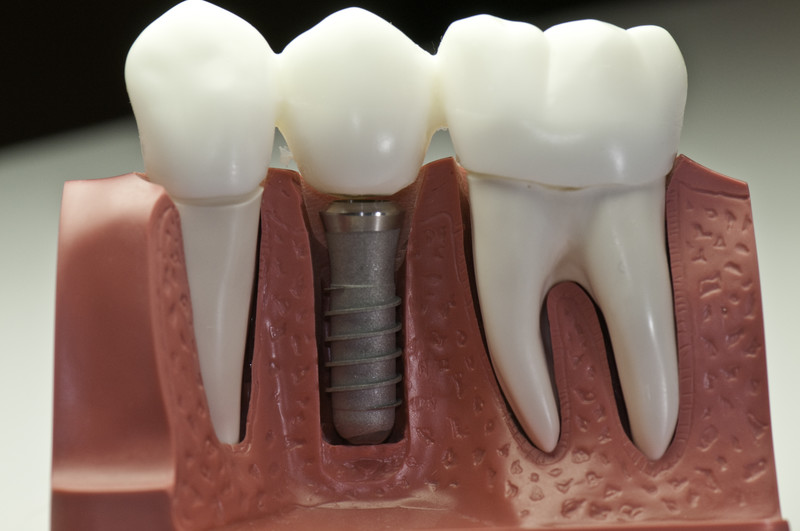
A dental implant is a fixture placed in the jawbone to support a restoration. After it becomes stable in the bone, a connector and replacement tooth can be attached. Implants may be considered for one tooth or as part of a plan for several missing teeth.
The implant is only one part of the finished result. The gums, bone, implant position, restoration, bite, and cleaning access all affect long-term function.
Reasons to talk with a dentist
An implant evaluation considers available bone, gum health, neighboring teeth, the bite, medical history and medications, nicotine use, and how long a tooth has been missing.
Diagnostic images are often needed. Some people may need care before placement; others may be better served by a bridge, denture, or another plan.
Your visit
The dentist examines your mouth, reviews your health history, and discusses alternatives, stages, responsibilities, and expected costs.
If treatment proceeds, the implant fixture is placed in the planned position. Healing time varies with the person and the site.
When the implant is ready, the replacement tooth or teeth are made to fit the space and bite.
Clean around the implant daily and keep recall visits so the implant, gums, bite, and surrounding teeth can be monitored.
After your visit
An implant is not automatically best for every person. A bridge can provide a fixed result using neighboring teeth, while a removable partial denture can replace several teeth in one appliance.
Compare treatment time, effects on nearby teeth, cleaning, repairs, future maintenance, and total cost before deciding.
Common questions
The timeline varies with healing, bone condition, the number of implants, and whether other procedures are needed. Treatment commonly occurs in stages.
Not everyone is an immediate candidate. Bone, gums, health conditions, medications, smoking, and maintenance all affect the decision.
No dental treatment can be guaranteed for life. Longevity depends on health, planning, bite forces, hygiene, and maintenance.
Daily brushing and cleaning around the implant are essential. Ask for a demonstration tailored to your restoration.
Every recommendation starts with an evaluation. Request a visit in Lakehills or call the office with your questions.